Friday, 7 November 2014

South Korea

Black Flower, Kim Young-ha
검은 꽃, 김영하

Part history lesson and part love story, Black Flower takes place during an almost forgotten moment in history when a group of Koreans sailed to Mexico to start a new life in the early days of the twentieth century.

Based on actual events, I stumbled across this fascinating story one day while passing time at bookstore. It follows a group of Koreans seeking to leave the Korean Empire as it collapses. They board a ship to Mexico, hoping for a better life, but are trapped in indentured servitude as hacienda labourers. 

Black Flower succeeds as a window onto this otherwise unknown moment in history. I found the story otherwise tending to veer into over-long history lessons with details and explanations of the Mexican Revolution or the hacienda system. These provide context, but distract from the story, which is ultimately left not devoting enough to developing the its main characters.

I would certainly be keen to add another South Korean book to the roster, to see if my sticking points are to unique to Black Flower or rather aspects of Korean literature that I'm not familiar with.

Thursday, 3 July 2014

New Zealand

Once Were Warriors
Alan Duff

Following on the heels of my leisurely stroll down Thai memory lane with Four Reigns, comes Once Were Warriors, an emotional, unblinking look at the caustic life of Māori living in the an urban ghetto. This is a tough read through a desperate cycle of poverty, alcoholism, abuse, hopelessness, and violence in all its forms for the Heke Family living in the grim coucil estate of Pine Block. 

The author, part Māori himself, doesn't take the easy way out of blaming Pākehā (Europeans) for Māori problems, but instead creates a complex picture of people who can be their own worst enemy, but have also suffered under the long-term effects of colonialism. Alan Duff painful's indictment shines a spotlight on a group at the rock bottom in the hopes of cultural turnaround through a reconnection with old traditions and practices. 

The sobering 1990 book was made into a 1994 film that resounded through New Zealand society and is felt to have had an impact on reshaping attitudes and the relationships between Māori and Pākehā.

Wednesday, 2 July 2014

Thailand

Four Reigns, Kukrit Pramoj
สี่แผ่นดิน, คึกฤทธิ์ ปราโมช

A sprawling walk down memory lane, as Kukrit Pramoj, scholar, politician, and one-time Prime Minister of Thailand, recounts the lives of a family of minor courtiers over the reigns of four Thai kings (whence the title). 

In its early parts, I found the book particularly captivating as Pramoj describes the ins and outs of life in a Bangkok now long unknown to us. The Thai court and its customs, but also the everyday life of a family from the 1880s to 1946, in the "Venice of the Orient" whose canals give way to motorcars. As the book moves forward into more recent and familiar territory, it becomes a remarkable testament to the enormous changes Thailand has experienced in a very short period. 

I delighted in the minutiae of old Thai customs and royal traditions, without ever feeling that these got in the way of the plot or the character development. I found the translation, however, very uneven. In places, it's really quite masterful, dealing deftly with many Thai-language intricacies such as its complex personal naming conventions and old royal traditions. In other cases, awkward translations or lengthy explanations in brackets bog down an otherwise airy text. 

In all, a great historical record of a country stepping into modernity.

Tuesday, 17 June 2014

Bangladesh

Brick Lane
Monica Ali

In her Year of Reading the World project, Ann Morgan had to lay some groundwork as to what constituted a book "from" a country. Does the author have to be born there? Live there? Does it have to be written about that place? Does it count if it's written about a different place? The answers, it turns out, were rarely straightforward.

A case in point is my archive entry for Bangladesh. Author Monica Ali was born in Bangladesh to a Bangladeshi father and an English mother but then grew up in England from the age of three. Brick Lane begins in Bangladesh and deals with a young woman who moves from a village to enter an arranged marriage in London with and older man. Should this book of culture clash and the immigrant experience then be considered "English" or "Bangladeshi"? Letters to England from the woman's sister in Bangladesh play an important role in the narrative as well, further blurring the line of where the book might be "from".

There isn't, of course, a clear-cut answer to this question, just my own personal choices as I swashbuckle the literary high seas and shifting sands of place as I plot my course to circumnavigate the globe.

Thursday, 5 June 2014

Japan

Kafka on the Shore, Haruki Murakami
海辺のカフカ, 村上春樹

A Murakami classic from Japan's most famous contemporary author. Murakami has a very distinctive writing style and often revisits the same themes and symbols in his book; so much so, in fact, that a "Murakami Bingo" sheet exists [link]. Playing along, I nearly filled up the entire card! I think it's a big part of the reason many people say Kafka on the Shore is their favourite Murakami book, its filled with the spooky and surreal, enigmatic characters in otherworldly situations, and talking cats that people love. How can anyone help but liking a book with a talking cat?

I've read many of his other books and, having lived in Japan, read many other Japanese authors as well. In some ways, Murakami's fanciful metaphysics make him an outlier to other Japanese authors. Nor does he really delve much into Buddhist notions of dharma, reincarnation, or karma, the way many, such as Yukio Mishima, do. That said, there is a common sense of something that cuts across the Japanese literature I've read and, as I was thinking how to describe it, continually returning to words such as "melancholy" and "futility", I had a "Eureka!" moment. I remembered a Japanese term I'd learned living there: wabi-sabi (侘寂). Wabi-sabi is sometimes described as "beauty that is imperfect, impermanent, and incomplete". There are whole books written about wabi-sabi; Japanese people would generally say it is simply unexplainable. Upon reflection, it really is the indefinite element pervasive to Japanese books.

More about wabi-sabi here.

Sunday, 11 May 2014

Indonesia

Saman
Ayu Utami

My fourth stop on my journey to read the world is Indonesia. I had actually tried to buy an Indonesian author even pre-Read-the-World project, but couldn't find any on the bookstore shelves of Singapore. Given that Indonesia is Singapore's biggest neighbour, I would have though people might be interested reading a thing or two about it, but I guess not.

In contrast to The Sand Fish, Saman is indeed a work of translation from Bahasa Indonesia, with a note from the translator Pamela Allen. As a translator myself, it's always lovely to see translation – usually something invisible and unaccounted for – be given a voice and translators an opportunity to say something. Since most people know little about Indonesia or its history – and the book takes place during a chaotic period of its history – the translator must have had a tough time with it all, but did so with aplomb. The book reads seamlessly, and the translation could not be felt.

Saman caused quite a firestorm when it was first published in Indonesia, touching o­n all the country's taboos: extramarital sex, political repression, and the relationship between Christians and Muslims. It is a shifting story, moving from time, place, and protagonist. The choice of Saman as title made this shifting a bit muddled for me. As the book's title character, the story is sometimes told by Saman, and sometimes by others about Saman; but other times the story told by Saman is about another person, or is told by another person about another person. – Don't get me wrong, I don't mind this kind of storytelling, but Saman as the title led me to think of Saman as the protagonist, when that wasn't really always the case. Otherwise, an interesting glimpse into turbulent slice of Indonesian life.

Tuesday, 15 April 2014

United Arab Emirates

The Sand Fish
Maha Gargash

An Etihad Airways stopover on a recent flight from Asia to Europe prompted the third destination in my journey to read the world: the United Arab Emirates. Although not available in Singapore, The Sand Fish was widely available at bookstores, tourist shops, and even at some newsagents in the UAE. I picked up my copy as I exited the airport into the dusty haze of Abu Dhabi and made my way to sand dunes of the interior.

As the book was originally written in English, I had the impression that The Sand Fish was intended for outsiders looking in. In the afterword, the author states that this was indeed her intent, but not as I might have suspected, for foreigners reading about Dubai. The discovery of oil brought such monumental and rapid changes the UAE, that the 1950s world described in the book is as foreign to Emiratis today as it is to armchair readers anywhere. 

The Sand Fish proved an interesting reading experience as I found the protagonist rather unlikable. I kept waiting for Noora to save herself from herself in a classic (Western) narrative of self-discovery and emancipation. But, of course, the whole point of reading the world is to get away from the tried-and-tested structures of well-rutted literary paths and be exposed to different ways of being. Looking back on Noora's tale, I recognise that self-discovery and emancipation would have been in short supply for an uneducated woman in 1950s Arabia. Such story simply would not have rung true. With that realisation, the veil dropped – as it were – and The Sand Fish offered an beguiling insight into Noora's life and lifestyle, and why "unlikable" might have actually been "realistic" instead.

Sunday, 16 February 2014

Colombia

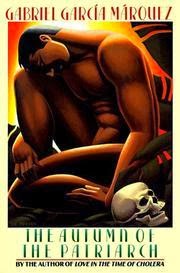
The Autumn of the Patriarch, Gabriel García Márquez
El otoño del patriarca

Gabriel García Márquez is probably my favourite author and I have read quite a number of his books. I'm lucky to be able to read them in Spanish, but I happened to pick up The Autumn of the Patriarch in English at a book sale. It's probably just as well because it is a terribly challenging read. I'm tempted to say I might not have actually been able to get through it in Spanish. In fact, The Autumn of the Patriarch frequently pops up on lists of most challenging books to read, up there with Naked Lunch and Finnegans Wake.

With sentences that go on for chapters, jump across time periods, and shift from first to third person, The Autumn of the Patriarch paints a vivid portrait of the rambling, failing mind of a dictator caught in the madness of his own dictatorship. The narrative challenges, while not ideal beach holiday reading, are perfect for describing the General's long, nightmarish reign and the surreal experience of totalitarianism. It's a book I would like to reread (in Spanish?) when I have the time for proper contemplative reflection.

Friday, 7 February 2014

Guadeloupe

La migration des cœurs
Maryse Condé

When Ann Morgan started her A Year of Reading the World project, she came up against the tricky question of what to do about reading works in translation. She is able to read in French and German "slowly and with a very big dictionary" and felt that surely it would be better to read something in its original language. Yet she had quite the inner struggle about the actual importance of translation to her project and the unfortunately disadvantaged position of non-English writers who must both face the juggernaut of the English language's massive literary output and the disinterest of English publishers in publishing translations. 

In the end, she embraced translation, and you can read all about her process of making the decision here. As a translator myself, I certainly understand the importance of promoting work in other languages and ensuring that people are able to express themselves naturally and to the best of their abilities in their native language. I too am going embrace translation as I read the world, but I'm not going to shy away from reading books in French and Spanish when I can. It will open up more options to me, especially from further-flung places like Mauritania or Paraguay, and will help me keep up my skills in those languages.

I read Guadeloupean author Maryse Condé's book La migration des cœurs in high school and, to be honest, I don't really remember much about it. I did discover that it is now available in English translation under the title Windward Heights, an allusion to Condé's reinterpretation of Wuthering Heights in the colonial Caribbean. One thing I do remember is that the dialogue was often written in French Creole – a most disconcerting fact to high-school-French-reading me. It would be quite interesting to see how the translator approached this sticky wicket and whether he or she used analogous English West Indian Creole.

Monday, 3 February 2014

Mexico

La ley del Amor
Laura Esquivel

Softmore work from Mexican author, Laura Esquivel, which followed on the heels of Like Water for Chocolate, a wonderful book made into an equally wonderful film, which is the highest-grossing Spanish-language film of all time in the United States. Big shoes to fill indeed.

The Law of Love is quite an interesting concept for a book, a multimedia effort incorporating music and artwork, with a CD and illustrations. I felt, however, the multimedia aspect was more of a novel aside than a really integral part of the book. This story of New Age-sci-fi-magical realism and spirituality, stretching from the twenty-third century back to Montezuma's Mexico, fell a bit flat for me. The narrative was a bit forced at times and the characters hard to relate to. 

Perhaps when you start off so high, like Esquivel did with Like Water for Chocolate, it's difficult to go anywhere but down. Her latest book, Malinche, about has gotten some good press however. It's about conquistador Hernan Cortes' native Mexican interpreter and mistress, a real historical figure who is both scorned as a traitor and revered as the mother of the raza cósmica in contemporary Mexico. I'm interested in reading more about this engimatic contradiction, so Malinche might figure in the list of next Mexican book to read.